
Parchment Coffee Reception

The milling process begins with controlled reception of parchment coffee.
Upon arrival, coffee is received, identified and recorded according to the applicable lot or delivery documentation.
Our reception procedures are designed to support:
• Accurate weighing
• Lot identification
• Documentation
• Safe handling
• Storage allocation
• Traceability
• Production planning
Every lot is treated as an individual product with its own identity and quality characteristics.
COFFEE STORAGE & WAREHOUSING
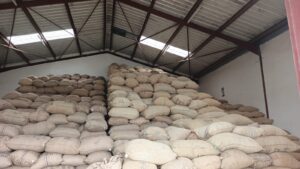
Proper storage is essential to preserving green coffee quality.
Our warehouse operations are designed to provide secure and organized storage before and after milling.
Our warehousing services include:
• Parchment coffee storage
• Green coffee storage
• Lot segregation
• Inventory management
• Bag identification
• Dispatch management
• Secure handling
We maintain appropriate procedures for minimizing contamination, physical damage, moisture-related risks and unintended mixing of coffee lots.
DRY MILLING
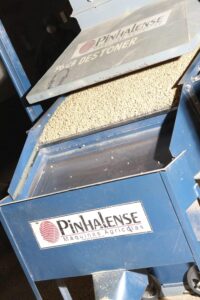
Turning Parchment into Export-Ready Green Coffee
Dry milling is one of the most important stages in the coffee value chain.
At ICM, parchment coffee passes through a controlled process designed to remove the parchment layer and prepare the beans for grading and further quality assessment.
The process includes:
1. Receiving-Coffee is received and verified against delivery documentation.
2. Pre-cleaning-Foreign material and unwanted particles are removed before milling.
3. Hulling-The parchment layer is mechanically removed from the coffee bean.
4. Grading-Beans are separated according to applicable physical characteristics and client requirements.
5. Quality Control-Samples are evaluated to verify physical and cup characteristics.
6. Packing-Finished coffee is packed according to the required market or buyer specification.
COFFEE GRADING
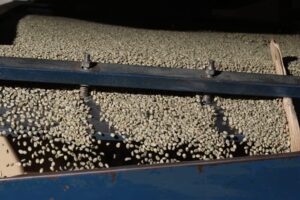
Kenyan coffee is commonly classified using grades associated with bean size, density and other quality characteristics.
Our grading services include preparation of grades such as:
AA, AB, PB, C, E, TT, T, HE, UG, UG1, UG2, UG3, MH, ML, NH, NL.
Important: Grade names should not be presented as guarantees of cup quality. Physical grade and cup quality are related
QUALITY CONTROL
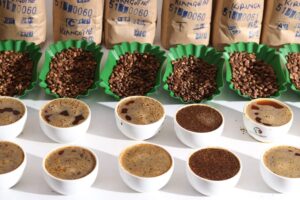
Quality Starts Before Milling
Our quality-management approach is designed to identify and control potential quality issues throughout the milling process.
Quality checks can include:
• Physical bean inspection
• Moisture analysis
• Screen-size analysis
• Defect analysis
• Density assessment
• Green-bean assessment
• Cupping
• Lot comparison
Where applicable, samples can be prepared for:
• Growers
• Farmer cooperative societies
COFFEE CUPPING
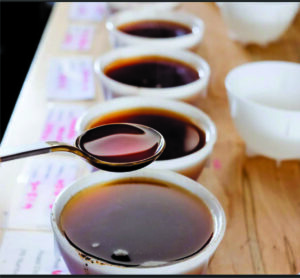
Understanding Coffee Beyond the Bean
Physical grading tells only part of the story.
Our cupping and sensory evaluation services help identify the characteristics of a coffee and provide useful information for marketing, lot selection and buyer communication.
Cup evaluation considers:
• Aroma
• Fragrance
• Acidity
• Body
• Sweetness
• Flavor
• Balance
• Cleanliness
• Aftertaste
• Overall impression
SPECIALTY COFFEE
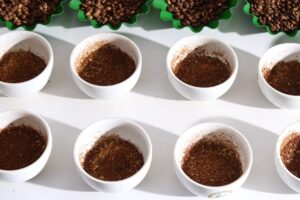
Preparing Kenyan Specialty Coffee for Global Buyers
Kenya has a strong reputation for distinctive Arabica coffees, particularly those produced in high-altitude regions with suitable soils, climate and careful processing.
We support the preparation of specialty coffee lots with an emphasis on:
• Lot separation
• Origin identity
• Traceability
• Quality preservation
• Physical grading
• Sensory evaluation
• Buyer specifications
• Export preparation
Our objective is to ensure that specialty coffee retains its identity throughout the milling and handling process.